

The Real Takeaway
- Today’s denial driven AI models worsen patient experience and administrative burden.
- AI Concierge services flip the model by helping patients access appropriate care proactively.
- The financial upside is significant: higher Star Ratings, lower operational costs, and better retention.
- AI Concierge improves HEDIS scores through prevention, care gap closure, and engagement.
- Organizations that prioritize patient empowerment—not denial automation—gain long term competitive advantage.
For years, the healthcare industry has applied AI with one narrow purpose, automating denial decisions. Recent headlines show where this mindset leads.
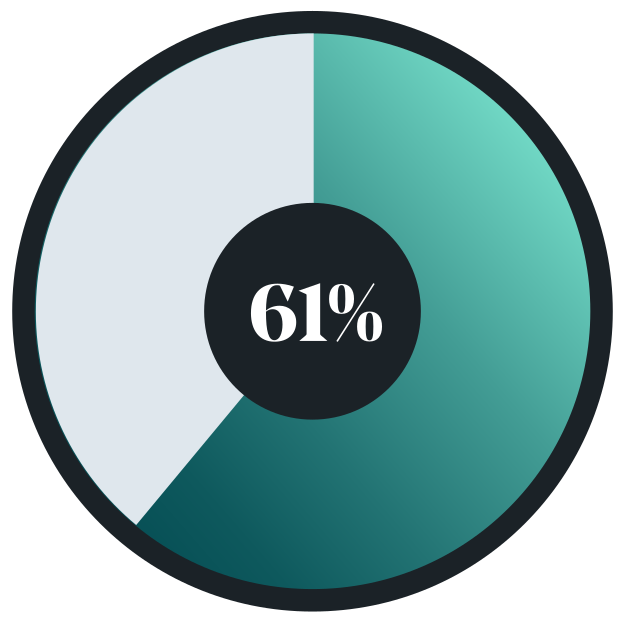
A federal initiative is piloting AI‑supported prior authorization in Medicare, with savings tied to reducing use of selected services, while the American Medical Association reports 61% of physicians fear AI is increasing prior‑authorization denials and contributing to preventable harm.
This is the predictable outcome of building systems designed to say “no.” But a different AI future is possible, one where technology guides, informs, and empowers patients instead of blocking them.
The Problem: AI Built to Deny, Not to Support
AI‑powered prior authorization tools are reinforcing a system already strained by complexity. Physician and legal analyses note that some automated systems generate large batches of denials and can produce far higher‑than‑typical rejection rates, so the more complex or costly the request, the more friction patients and clinicians encounter. Patients often don’t understand their benefits, seek the wrong care, trigger lengthy authorization workflows, face denials, and then either give up or add administrative burden through appeals.
The fallout is broad and emotional. A recent KFF tracking poll found nearly three quarters of Americans view prior authorization delays and denials as a major problem. This approach isn’t sustainable. But AI can do far more than automate barriers.
A Better Vision: AI as a Healthcare Concierge
An AI Concierge reverses the denial-first mindset by engaging patients long before claims are filed.
It proactively:
- Explains benefits in ways patients can understand
- Guides members to in network, clinically appropriate providers
- Surfaces coverage limitations before an appointment
- Suggests preventive, lower cost alternatives
- Ensures necessary documentation is ready before pre-authorized review
The result: fewer surprises, fewer denials, less administrative waste, and a better care experience for patients and providers.
The Business Case for AI Concierge Services
The financial impact is substantial—and measurable.
Improved member experience and fewer authorization surprises can strengthen quality performance and financial outcomes for Medicare Advantage plans, since higher Star Ratings are rewarded by CMS.
Operationally, AI‑assisted workflows can streamline tasks, reduce avoidable follow‑ups, and shorten resolution times, though the impact varies by organization and implementation.
Retention also benefits when patients receive timely guidance and fewer billing or authorization surprises, and proactive navigation can help avoid high‑acuity episodes when appropriate alternatives exist.
Why AI Concierge Improves HEDIS Performance
With hundreds of millions of Americans in plans reporting HEDIS measures, even modest improvements can translate into meaningful financial and competitive advantage.
An AI Concierge can boost HEDIS results by:
- Increasing preventive screenings and immunizations
- Identifying and closing care gaps earlier
- Supporting chronic disease management and medication adherence
Instead of reacting to problems, organizations can prevent them.
Moving Beyond Denial-Driven AI
While federal pilots such as WISeR focus on testing AI‑enabled prior authorization to reduce low‑value utilization, forward‑thinking organizations are taking a different path. Preventing an avoidable hospitalization through proactive coordination delivers more value than denying a claim after the fact.
AI Concierge solutions help organizations reduce waste without compromising access, because they prevent misuse upstream rather than punishing patients downstream.
How to Implement an AI Healthcare Concierge
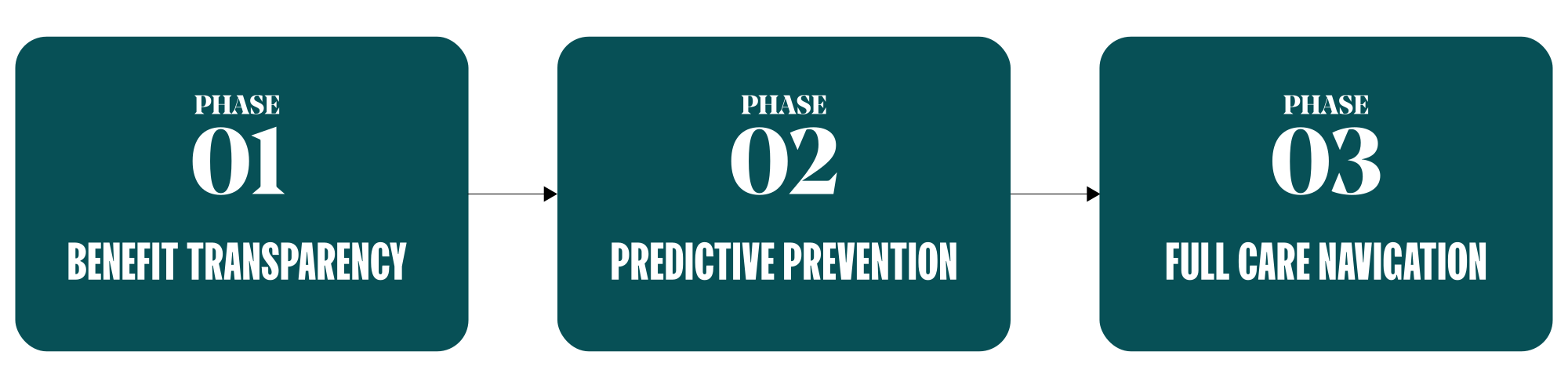
Healthcare leaders can approach implementation in three strategic phases:
Phase 1: Benefit Transparency
Deploy AI tools that proactively explain benefits and reduce call center overload.
Phase 2: Predictive Prevention
Use analytics to identify members at risk for costly interventions and guide them toward early, preventive care.
Phase 3: Full Care Navigation
Expand into end-to-end navigation that improves patient outcomes and enhances organizational performance.
This creates a scalable, AI-enabled member experience that goes far beyond denial automation.
The Competitive Advantage
Organizations building AI Concierge services are investing in:
- Better member experience and higher satisfaction
- Quality improvements that can support stronger Star Ratings
- Operational efficiency from streamlined, AI‑assisted workflows
- Revenue protection through improved access, adherence, and outcomes
This is how healthcare organizations differentiate in a crowded, cost‑pressured market.
Choosing the Future of AI in Healthcare
A denial‑driven AI strategy is shortsighted and increasingly risky. As many physicians have emphasized in surveys and testimony, clinical judgment and patient context must stay central to decisions.
AI Concierge services embrace this principle by empowering patients with clarity, choice, and timely intervention. The technology exists. The policy environment is evolving. The need is immediate. The question isn’t whether AI will reshape healthcare. It’s whether we’ll use it to build walls, or build bridges.
Healthcare organizations that use AI to guide and empower patients—not simply automate decisions—will build stronger outcomes and trust.
Explore how Perficient helps organizations in the Healthcare and Life Sciences industry transform their business.