

The Real Takeaway
The personalization gap in financial services is not waiting for the next platform upgrade. It is an operating model problem that requires governance, accountability, and speed.
Adobe’s Financial Services CX research highlights that leaders see the gap, while industry coverage shows customers expect more personalization across channels.
Customers expect tailored experiences at every touchpoint. Institutions that close this gap earn trust and retention, because relevance lands at actual decision points rather than after the fact.
The ones that do not keep losing ground. Start with unified profiles. Orchestrate in real time. Execution matters more than intention.
Most Financial Institutions Believe They Personalize Effectively. The Data Suggests Otherwise.
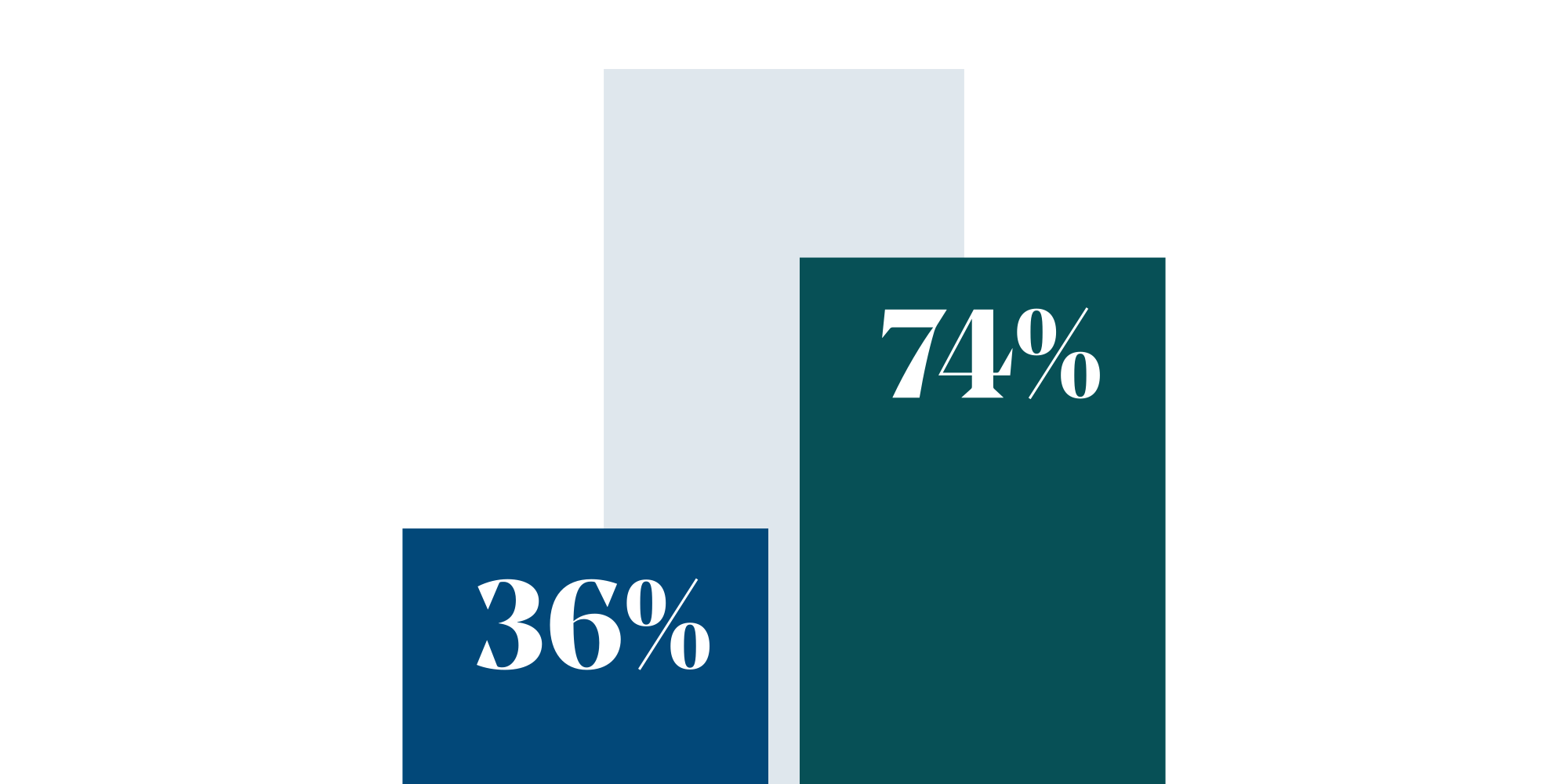
Adobe’s State of Customer Experience in Financial Services found that 74% of FSI executives recognize customers expect tailored experiences. Only 36% of the customer journey is actually personalized. That’s a 38‑point gap between perception and execution.
What this Actually Means
Financial decisions carry weight. A customer exploring mortgage options needs guidance that reflects their income, timeline, and risk tolerance. A small-business owner managing cash flow needs insights that fit their industry and growth stage.
When these moments get generic treatment, customers move on. Not because they are being difficult. Because relevance matters at decision points. External benchmarks align. Consumers expect providers to use their data responsibly to personalize, and they get frustrated when this does not happen.
Institutions lose entire customer segments because their personalization strategy begins and ends with 'Hi, [First Name].' That is not personalization. That is automation.
What Creates the Gap
Three patterns show up consistently.
Fragmented data systems. Customer data lives in product silos. Checking doesn’t talk to mortgage. Wealth has no visibility into business banking.
You cannot personalize what you cannot see, and executive surveys continue to cite silos as a top barrier.
- Product‑centric operating models. Most FSI orgs are structured around products, not customers. Marketing reports to product lines. Technology serves channels, not journeys. The org chart works against personalization. Industry analysis calls for lifecycle, journey based personalization rather than episodic campaigns.
- Compliance as a blocker. Privacy concerns are real. But they have become the default reason to avoid personalization entirely. The issue is not compliance. It is governance. Consumers indicate they will share more data for better experiences when value and control are clear, which requires consent and transparency by design.
What Closing the Gap Requires
Closing the gap requires unified customer profiles, real time orchestration, and content supply chains that keep pace with customer behavior.
- Build unified customer profiles. Identity resolution across all touchpoints. One customer, one profile, real time updates. If a customer applies for a home equity line at 10:00 a.m., your marketing system should reflect that by 10:05 a.m. Assign ownership for customer data, and design consent frameworks that maximize personalization within regulatory boundaries.
- Orchestrate journeys in real time. Most FSI personalization still runs on batch. Modern orchestration responds to signals as they happen. Industry coverage describes this shift toward dynamic, AI powered micro personalization in banking. For example, a customer browses mortgage rates, gets pre qualified, then stops. Within 24 hours, they receive content addressing objections, such as appraisal timelines, closing costs, and rate locks. This is an operating reset, not just a tooling change.
- Scale your content supply chain. Personalization at scale requires content velocity. Generative AI is compressing production cycles from weeks to days in enterprise environments, by accelerating variation, localization, and testing while preserving brand guardrails.
How to Measure Progress
- Journey coverage. Percentage of the journey that is personalized. Use the 36% baseline as a caution marker and set targets by journey and line of business.
- Conversion by cohort. Track application completions, cross sell acceptance, and retention for personalized versus generic experiences. Customer studies connect helpful personalization to continued use and loyalty.
- Time to content. How fast can you deploy new personalized experiences. Leading teams report cycle time compression with AI assisted content operations alongside governance.
Track these monthly. If the numbers are not moving, your personalization strategy is theoretical.
The personalization gap in financial services is not waiting for the next platform upgrade. It is an operating model problem that requires governance, accountability, and speed. The institutions that close this gap build trust faster and retain customers longer. The ones that do not keep losing ground.
Explore how Perficient delivers solutions on Adobe Experience Cloud.