

The Real Takeaway
- Automakers are racing to define the software-defined vehicle. Consumers are waiting to see if any of it actually benefits them.
- Independent reporting shows SDV ambition is real, but execution and buyer confidence remain uneven, with automakers reworking roadmaps and confronting long‑term software upkeep and OTA support costs.
- Whoever closes the gap between industry ambition and consumer expectation first will lead the next wave of SDVs.
The Road to Software-Defined Vehicles Is Still Being Paved
The auto industry is in the middle of one of the biggest transformations it has ever attempted. OEMs are making significant bets on software integration, global competition is intensifying, and the strategies shaping the industry are still very much in flux. Automakers are essentially redefining what they are, shifting from companies that build vehicles to companies that build technology platforms on wheels.
But here’s what gets lost in the industry conversation: consumers aren’t following the architecture debate. They’re asking a simpler question: "Does this actually make my life better?"
And right now, the answer from most buyers is a cautious “maybe.”
Automotive News’ SDV coverage has repeatedly pointed to fragmentation, rework, and a need for more disciplined platforming to translate ambition into real customer value.
OEMS are making strategic bets on software-defined vehicles, but consumers are weighing very different factors when making purchase decisions. The gap between those perspectives is significant, and closing it is critical.
What Consumers Actually Care About
Perficient’s 2025 connected products research surveyed more than 1,300 respondents across consumers, OEMs, and manufacturers. What it surfaced is a consistent and meaningful gap between what automakers are prioritizing and what buyers actually value.
The biggest disconnect? Trust.
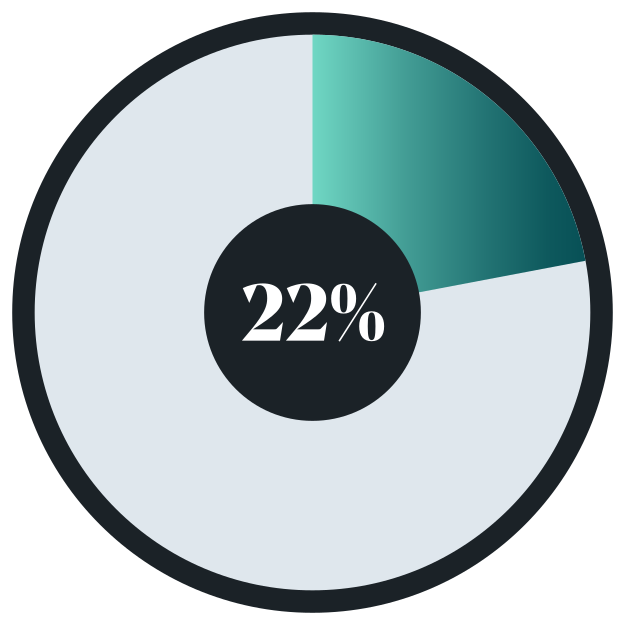
Consumers rank it as their top concern when it comes to connected vehicles, yet only 22% of manufacturers flagged it as a critical factor in adoption. That is not a minor misalignment; it is a fundamental one.
Privacy is part of that. Despite real and widespread anxiety about data collection, only 19% of consumers say they feel fully aware of what their vehicles are gathering. For an industry building its future on connected data platforms, that number should be a wake-up call.
There’s also a gap in how OEMs think about why connected features matter. Many enter the connected space for internal reasons: field data, R&D insights, operational efficiency. Those are legitimate goals.
But consumers aren’t buying vehicles to support OEM data strategies. They want features that improve daily driving, safety, and convenience. SAE‑sponsored V2X consumer research released at WCX 2025 finds safety and efficiency consistently outrank transactional add‑ons, underscoring where SDV value should land.
"Consumers are more worried about the experience than the engineering. OEMs often enter the connected space for internal reasons like field data and R&D, but buyers expect tangible value in everyday use."
— Kevin Espinosa
And when it comes to integration, 38% of consumers said connectivity with other devices (home systems, mobile apps, wearables) was a key feature they wanted. The vehicle isn’t a standalone product anymore. It’s a node in a larger ecosystem, and buyers expect it to behave like one.
The Global Pressure Makes This More Urgent, Not Less
Competition is accelerating. Automotive News has chronicled how legacy players are refactoring software programs, standardizing stacks, and embracing OTA, and how decade‑long maintenance costs and cybersecurity expectations are now central to the SDV business case.
Speed matters, but it can’t come at the cost of consumer confidence. Collaborative development models, shared architectures, and over-the-air updates only deliver value if buyers trust the systems they’re using and understand what’s happening with their data. Given the growing public scrutiny of data practices, OEMs should expect higher expectations for transparency and meaningful choice as connected programs scale.
This is where consumer signal data becomes a strategic asset. With the SDV roadmap still being written, prioritizing UX, data clarity, and cross‑device integration over internal “engineering wins” is more likely to earn adoption and loyalty. External buyer studies and SAE‑sponsored research point in the same direction.
Closing the Gap Between Industry Ambition and Buyer Reality
The automakers that come out ahead in the SDV era won’t necessarily be the ones with the most sophisticated software stack. They’ll be the ones who figured out how to make that stack mean something to the person sitting in the driver’s seat.
OEMs are looking to monetize, but customers are looking for better experiences. Whoever reconciles that disconnect first will lead the next wave of SDVs.
There are now more connected products in the world than people. Vehicles are becoming one of the most important nodes in that ecosystem. The question isn’t whether the SDV transition will happen; it’s whether the industry will build it around what buyers actually value before someone else does.
The Questions OEMs Should Be Sitting With
- "Are we building trust into our connected features from the start, or treating it as a communications problem after the fact?"
- "Do consumers actually know what data we’re collecting, and do they feel okay about it?" Many don't, clear, opt‑in mechanisms and plain‑language notices are quickly becoming table stakes.
- "Are we investing in the connected experiences buyers want: safety, efficiency, and simple activation, or features that mainly serve internal goals?" Buyer studies and SAE‑sponsored V2X work point to safety/efficiency first.
Automotive companies that design software-defined vehicles around real buyer expectations will lead the next era of mobility.
Explore how Perficient helps organizations in the Automotive and Industrial Manufacturing industry transform their business.