

The Real Takeaway
- Healthcare organizations need AI-focused Analytics Centers of Excellence (ACoE) to transform vast data into actionable insights
- Success requires four pillars: multidisciplinary teams bridging clinical/technical expertise; PACE framework (Policies, Advocacy, Controls, Enablement); robust technology infrastructure with cloud, AI/ML, and security; rigorous economic evaluation
- KPIs track clinical impact, operational efficiency, innovation metrics, and user adoption
- 24-month implementation delivers improved patient outcomes, operational excellence, and competitive differentiation through governed, scalable AI deployment with continuous safety monitoring
AI and generative AI are rapidly moving from experimentation to early operational use across diagnostics, operations, and patient‑facing tools, as highlighted by recent Stanford HAI healthcare policy workshops.
As the industry moves deeper into data driven decision making, building an Analytics Center of Excellence (ACoE) designed specifically for AI becomes essential. An ACoE provides the structure, talent, and governance needed to turn data into meaningful, repeatable, and scalable value.
Why Healthcare Needs an AI Focused ACoE
Healthcare organizations sit on vast amounts of clinical, operational, financial, and patient generated data. The challenge is not access, but transformation. Turning raw data into insights requires coordinated strategy, modern infrastructure, and cross functional talent. OECD guidance stresses the need for strong governance, privacy, and interoperability to unlock value safely. An AI powered ACoE provides this foundation by bringing together people, processes, technologies, and governance under one strategic framework.
1. People: Multidisciplinary Teams That Bridge Clinical & Technical Expertise
A successful ACoE starts with the right team. Healthcare AI intersects with clinical workflows, regulations, analytics, and product development, so the ACoE requires diverse expertise. This mix reflects governance practices identified by Stanford HAI and Duke Margolis, which emphasize cross functional clinical, technical, and ethical participation.
2. Processes: Establishing Governance Through the PACE Framework
Structured processes ensure AI development is safe, compliant, and repeatable.
The PACE framework—Policies, Advocacy, Controls, Enablement, provides the blueprint.
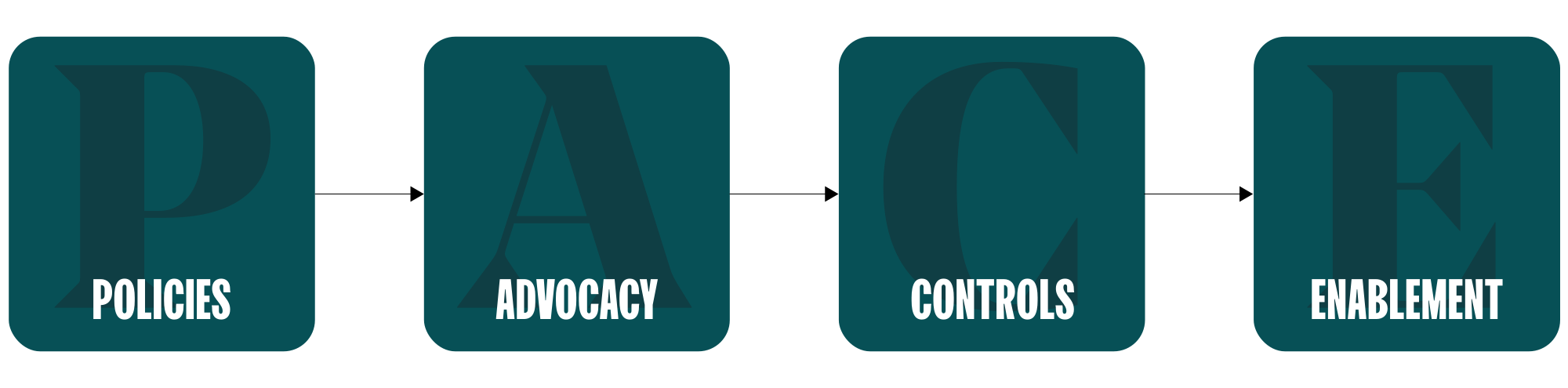
Policies
- Data privacy and governance (HIPAA, GDPR)
- Model development, validation, and lifecycle management
- Ethical AI guidelines and bias mitigation
- Clinical validation procedures
Advocacy
- Stakeholder engagement and communication
- Clinical training and workflow integration
- Partnerships with vendors, academic institutions, and regulators
Controls
- Model risk assessment
- Outcome validation and performance monitoring
- Quality assurance and audit processes
Enablement
- Technology provisioning and onboarding
- Innovation pipeline management
- Knowledge sharing and collaboration platforms
These processes mitigate risks such as bias, drift, and shadow AI, as documented in the CAOS framework.
3. Technology: Building the Technical Foundation
An ACoE relies on a resilient, healthcare ready infrastructure that supports analytics, automation, and clinical AI.
Core Infrastructure
- Cloud computing platforms with healthcare grade security
- Data lakes and warehouses optimized for clinical and operational data
- Integrated model development and deployment platforms
- Interoperability engines for EHR, imaging, and claims systems
AI and ML Capabilities
- Natural language processing for documentation and insights
- Computer vision for imaging diagnostics
- Predictive analytics for outcomes, risk scoring, and population health
- Generative AI for research, clinical summaries, and content creation
- Real time analytics for operations and throughput
Security and Compliance
- End to end encryption, access controls, and identity management
- Audit logging and monitoring for model performance and safety
- Privacy preserving techniques such as differential privacy where appropriate
Together, these tools form the backbone for scalable innovation and trustworthy use of health data
4. Economic Evaluation: Measuring Financial Impact
To justify investment in an ACoE, organizations need clear economic metrics across cost and benefit categories.
Costs
- Technology and infrastructure
- Talent and training
- Ongoing operations and model maintenance
Benefits
- Potential reductions in acute utilization when AI tools, including early warning and triage models, are validated and operationalized
- Higher revenue capture through improved documentation and analytics governance
- Reduced operational costs through automation and improved workflow throughput
- Improved quality metrics and reimbursement tied to real world performance
- Increased competitive differentiation from governed, scalable AI use
A rigorous financial model and post implementation monitoring ensure continuous value realization.
5. KPIs: Tracking Performance Across Clinical, Operational & Innovation Metrics
Healthcare ACoEs should measure success across multiple dimensions aligned to governance best practices. KPI categories align with Duke Margolis governance maturity models.
Clinical Impact
- Outcome improvements
- Reduced medical errors
- Readmission reduction
- Clinical decision support performance
Operational Efficiency
- Automation rates
- Resource utilization
- Staff productivity
- Cost per patient
Innovation Metrics
- Number of AI models deployed
- Model accuracy and reliability
- Time to deployment
- Research output
User Adoption
- Utilization and satisfaction scores
- Training completion rates
- Feature adoption metrics
6. Outcomes: Delivering Tangible, Measurable Results
A mature ACoE demonstrates value across three broad areas.
Patient Care
Diagnostic improvement has been demonstrated in validated imaging and clinical decision support use cases.
Personalization is supported by governed predictive analytics and risk models.
Patient and provider engagement improves with responsibly deployed patient facing tools.
Operational Excellence
Documentation automation has reduced administrative burden in governed deployments.
Workflow analytics improve throughput and operational efficiency in evaluated settings.
Cost management strengthens when model performance is monitored for drift, bias, and reliability.
Innovation Leadership
Standardized intake, evaluation, and lifecycle oversight enable consistent delivery of new AI driven solutions.
Competitive differentiation grows through transparent governance and responsible AI practices.
Industry recognition follows alignment with leading AI safety frameworks.
Implementation Roadmap
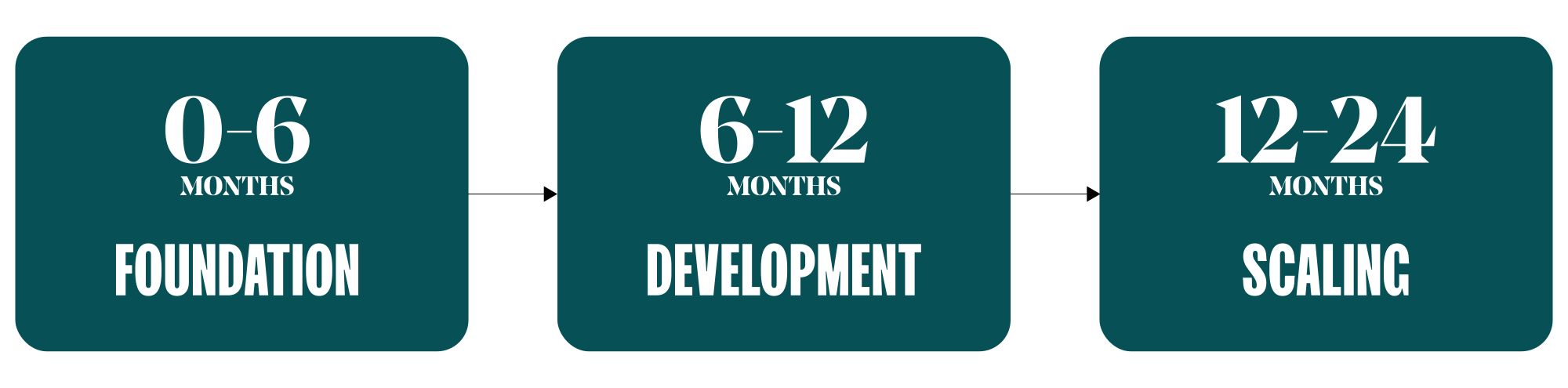
First 6 Months
- Establish governance and cross functional review processes
- Build the core team and prioritize initial use cases
- Deploy foundational data and security infrastructure consistent with OECD guidance
Months 6 to 12
- Launch early AI projects with safety checks, documentation, and monitoring plans
- Roll out workflow aware training programs for clinicians
- Establish model performance dashboards and drift detection practices
Months 12 to 24
- Expand use cases based on measured outcomes and governance capacity
- Optimize processes to reduce time to value
- Mature automation and analytics with ongoing equity, privacy, and safety reviews
Critical Success Factors
Three factors determine success:
- Executive sponsorship that drives governance and accountability
- Cross-functional alignment across clinical, operational, and IT teams
- Continuous monitoring to prevent model drift and quality degradation
Building an Analytics Center of Excellence gives healthcare organizations the foundation to scale AI responsibly. With the right governance, processes, and capabilities in place, organizations can move faster while maintaining trust. Those that build this foundation now will lead.
Explore how Perficient delivers AI-First Data Platforms solutions.