

The Real Takeaway
- Customer interactions are largely driven by predictable billing and service events
- Utilities already have the data needed to anticipate many customer needs
- Connecting billing, outage, and AMI data enables more proactive, accurate communications
- Better coordination reduces avoidable contacts and improves trust during high-pressure moments
Customer Experience Starts Before the Call
Customer calls are not random. They cluster around a small set of triggers: billing issues, outages, and service disruptions. A utility’s response to these events shapes customer trust, yet many organizations still operate in reactive, call-driven models. The signals behind these events already exist across billing systems, outage management systems (OMS), and AMI platforms before a customer reaches out.
When those signals are connected, customer demand becomes far more predictable:
“If a meter reads significantly more usage than the prior month, that means the bill is going to be higher. You can expect a call.”
At a time when utilities are under increasing pressure to deliver better customer experience (CX), acting on those signals earlier creates an opportunity to reduce avoidable contacts, improve first-contact resolution, increase billing transparency, and build trust through more timely, relevant communications.
The Data Access Gap
Most utilities already have the foundational data they need. Billing systems provide customer and revenue context. OMS platforms track service interruptions and restoration activity. AMI delivers near real-time visibility into usage and grid conditions.
The challenge lies in coordination. Customer service teams often have to pull information from billing, outage, metering, and CRM systems to understand what a customer is experiencing. AI and automation initiatives struggle to deliver consistent value because the underlying data remains disconnected.
The insight exists but is not available at the moment it is needed.
From Reactive to Orchestrated CX
Connecting billing, outage, and AMI data changes both how and when utilities respond.
Billing provides one of the clearest examples. Billing data is often the strongest indicator that a customer will contact the utility. When usage data is connected to billing information and customer context, utilities can identify unusual consumption patterns, explain the factors driving a bill, and provide greater transparency before bill shock occurs.
Outage communications present another opportunity. Customers sometimes receive outage notifications when service has not actually been interrupted, while others are affected without receiving timely updates. Combining AMI and outage data helps utilities identify who is actually impacted, improving the accuracy of notifications and restoration updates while reducing avoidable calls.
Usage transparency extends these benefits even further. Customers can access consumption data through monthly reports, portals, mobile apps, and proactive alerts when unusual usage patterns emerge. Instead of learning about a problem when the bill arrives, customers gain visibility earlier, reducing confusion and increasing trust.
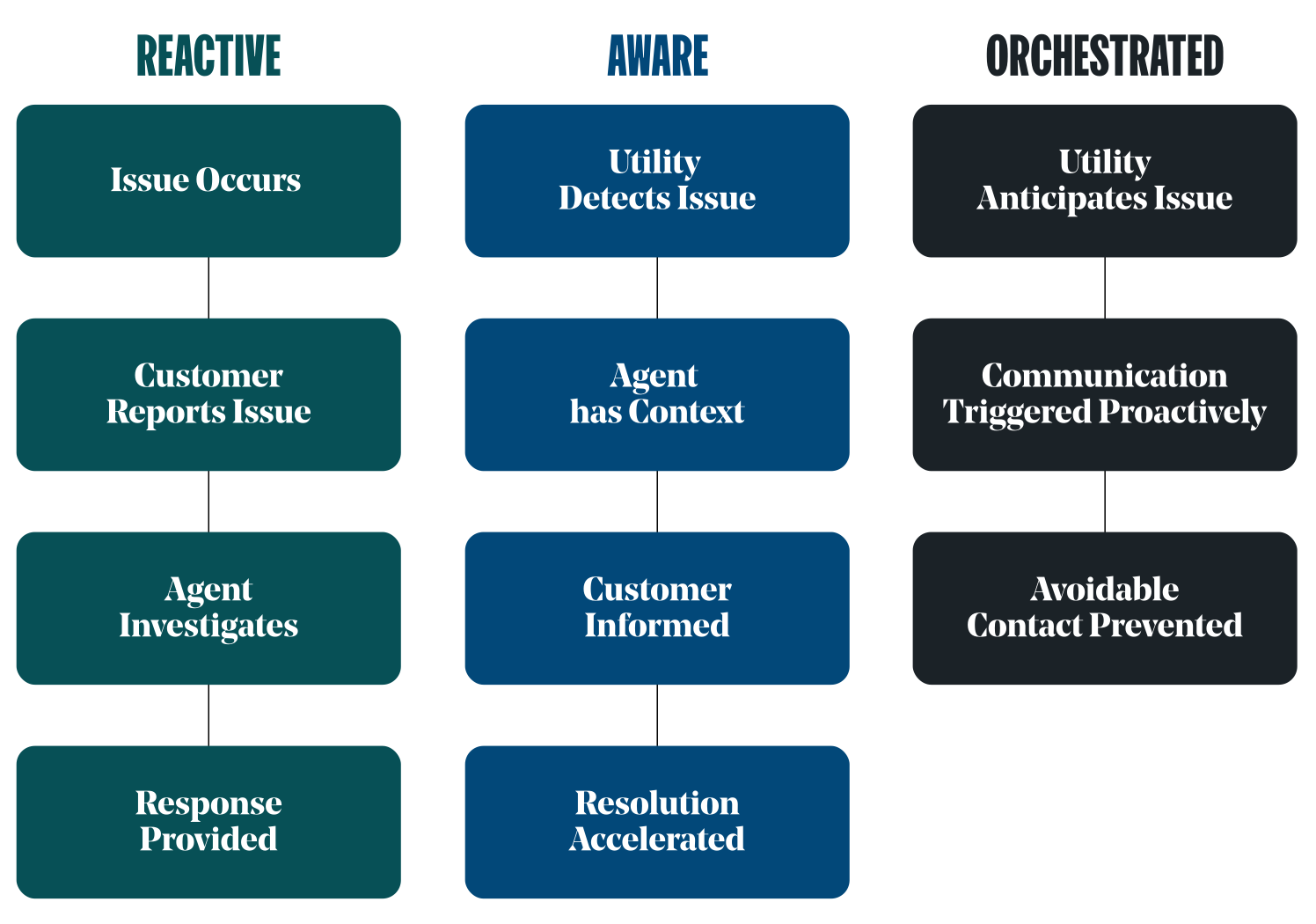
These examples demonstrate how utilities move from reactive, call-driven operations to an aware state, where connected data provides the context needed to understand customer needs and respond more effectively. Once that foundation is in place, utilities can begin orchestrating action across those systems, using connected data to identify issues, recommend actions, and initiate customer communications before a customer reaches out.
This is not far-off, future-state vision. It is a near-term operating shift enabled by existing platforms. Connected data creates awareness; orchestration turns that awareness into action.
Building the Foundation for Predictive CX
Organizations that consistently improve CX move beyond understanding what happened. They build the ability to anticipate needs, deliver more contextual responses, and continuously refine how they engage customers over time.
- Anticipate: Get ahead of customer needs
- Predict outages, service disruptions, and billing spikes
- Proactively communicate before customer demand peaks
- Reduce avoidable contacts during storms and high-volume events
- Deliver: Respond with context and consistency
- Provide a shared view across agents, digital channels, and field teams
- Equip agents with real-time insights billing, outage, and meter insights
- Improve first-contact resolution and reduce handling time
- Improve: Learn and adapt continuously
- Connect customer interactions back to operational data
- Identify patterns driving repeat contacts
- Drive measurable improvements that stand up to regulatory scrutiny
This shift represents a progression from reactive operations, where customers report issues, to aware operations, where connected data provides context, and ultimately to orchestrated operations, where signals trigger actions automatically. As capabilities mature, communications, workflows, and responses become increasingly coordinated across teams and channels.

CX as a Shared Outcome
When customer service teams have access to billing, outage, and AMI insights in a single view, they can move from explaining problems after they occur to helping customers before those problems escalate. Customer service then becomes part of a coordinated response rather than a downstream function reacting to events.
“The future of utility CX is predicting the call. The sooner you can do that, the better your response is going to be.”
Utilities that make this shift can reduce inbound volume during major events, improve billing transparency, increase customer trust, and deliver more consistent experiences across channels. The result is lower cost-to-serve, more efficient operations, and measurable improvements that hold up under customer, executive, and regulatory scrutiny.
Learn more about how Perficient turns AMI data into outcomes.