
Key Takeaways
- Utilities must modernize the grid while continuing to maintain and operate existing infrastructure.
- Homes, EVs, and distributed energy resources are becoming active participants in the energy ecosystem.
- This convergence increases operational complexity and exposes fragmented data across the organization.
- Trusted, connected data enables faster decisions, greater efficiency, and more effective grid management.
Utilities Are Being Asked to Build Two Futures at Once
One of the defining challenges facing utilities today is that they're being asked to operate in two realities simultaneously. The first is maintaining the infrastructure customers depend on every day. The second is building the infrastructure required for a very different energy future.
Utilities must continue maintaining existing generation, transmission, and distribution assets while funding major investments in new generation capacity, grid modernization, and expanding distribution capabilities. This creates constant pressure around capital allocation, operational priorities, and long-term planning.
This is further complicated by the fact that the EPC processes have not fundamentally changed in decades. Utilities are being asked to scale maintenance activity and major infrastructure buildouts at the same time while relying on delivery models designed for a very different era. Throughput needs to increase. Efficiency needs to improve. Reliability cannot suffer in the process.
That's the backdrop for nearly every major conversation happening in the industry today, including one of the most significant shifts utilities are now navigating: the convergence of the grid, the home, and the vehicle.
Microgrids, BESS & EVs Are Changing What Utilities Need to Manage
For decades, the relationship between utilities, homes, and vehicles was relatively straightforward: Utilities generated and delivered power. Homes consumed it. Vehicles existed outside the energy equation. These traditional roles and boundaries have disappeared.
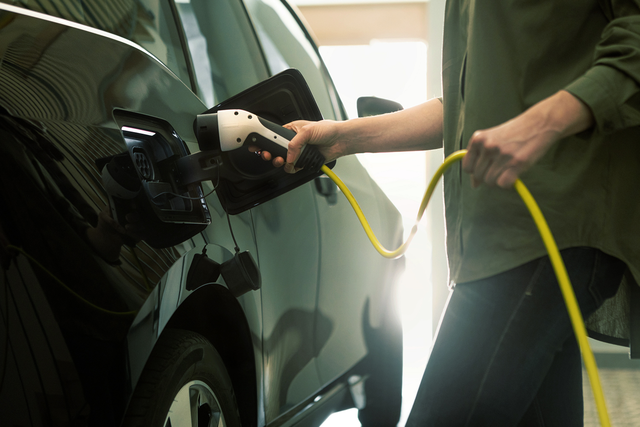
Homes are no longer simply destinations for energy consumption. Increasingly, they include solar generation, residential battery energy storage systems (BESS), and EVs. Together, these assets allow homes to generate, store, and manage energy, transforming them into a little microgrid.
The role of the vehicle is changing just as quickly. EVs now possess capabilities that go far beyond transportation. The same battery that powers a vehicle can also provide backup power to a home or job site in much the same way a portable generator can.
One major automotive organization even told us that they now think of the vehicle itself as secondary to the battery package and the services surrounding it. That's a remarkable shift. Attention is shifting from the vehicle to the energy it stores and the value that energy can create.
That shift is yielding new conversations between utilities and automotive manufacturers because both industries are evaluating how battery-stored energy can be used beyond transportation. For utilities, distributed energy resources (DERs) represent a meaningful shift in how resiliency can be approached. Energy storage that exists outside traditional infrastructure can help utilities avoid brownouts, make it through outages and blackouts, and augment solar generation and BESS within the home.
Similar questions are emerging around charging infrastructure. As EV adoption grows, utilities and automotive manufacturers have a shared interest in ensuring the infrastructure exists to support a more connected energy ecosystem.
The grid, the home, and the vehicle are increasingly functioning as parts of the same system.

Recognizing the System Is Easier Than Operating It
Understanding that these systems are becoming interconnected is one thing. Operating that way is another.
Customer data exists in one system. AMI data exists in another. Outage data lives somewhere else. Asset information, field information, and operational information often spread across multiple environments. The data exists, but it isn't always available where decisions are being made.
Customer service teams may not have access to operational information that would improve customer interactions. Metering information may not be readily available to support other parts of the business. Operational insights often remain trapped inside organizational and technology silos, making it difficult to respond to a system that has become more interconnected.
There's never been a better time to bust down silos of organization, data, and communication to make processes more efficient. As everything becomes more interconnected, utilities need trusted information that can move across the organization just as easily as energy moves across the ecosystem.
Utilities need trusted information that can move across the organization just as easily as energy moves across the ecosystem.
Data products are one of the most practical ways to do that. A data product is not simply a warehouse full of information. It's a trusted source of data built around a specific business need, with a known level of quality, timeliness, and usability.
Consider a customer-focused data product:

Bringing those data sources together creates a more complete view of the customer experience and gives customer-facing teams information they often don't have today to develop and successfully sell power and incentive plans.
The same concept applies to capital projects:

Bringing those sources together creates a much clearer picture of project performance, resource allocation, operational risk, and delivery challenges.
The objective isn't simply organizing data. The objective is creating trusted information that can move across customer service, operations, planning, asset management, and AI initiatives. Data products provide a practical way to connect information that is often scattered across the organization and make it usable where decisions are being made. That's becoming more important as utilities navigate simultaneous changes across infrastructure, customer expectations, DERs, and emerging technologies. Organizations with trusted, accessible data are better positioned to adapt, make informed decisions, and move faster as the industry continues to evolve.
The Grid Moves Energy. Data Moves Decisions.
Utilities have spent decades optimizing around a system where energy moved in a relatively predictable direction. Today's environment looks very different. Energy can be generated, stored, consumed, and potentially returned across a growing network of distributed assets.
Operating that system requires organizations to understand what's happening across it. That's why information matters as much as infrastructure. Managing a connected energy ecosystem requires trusted information, efficient processes, and data that can move across the organization as easily as energy moves across the network.
Organizations that build trusted data foundations today will be better positioned to adapt as energy systems continue to evolve and new opportunities emerge across utilities, homes, and vehicles.
The convergence of energy and automotive is only one part of a broader shift happening across industries.
For a broader look at how industry convergence is reshaping energy and utilities, oil and gas, automotive, and manufacturing, explore our State of Automotive & Industrials report.